Many homeowners assume swapping out a water heater is a simple "plug-and-play" task. However, Texas State Law and DFW municipal codes mandate that all replacements are permitted and inspected.
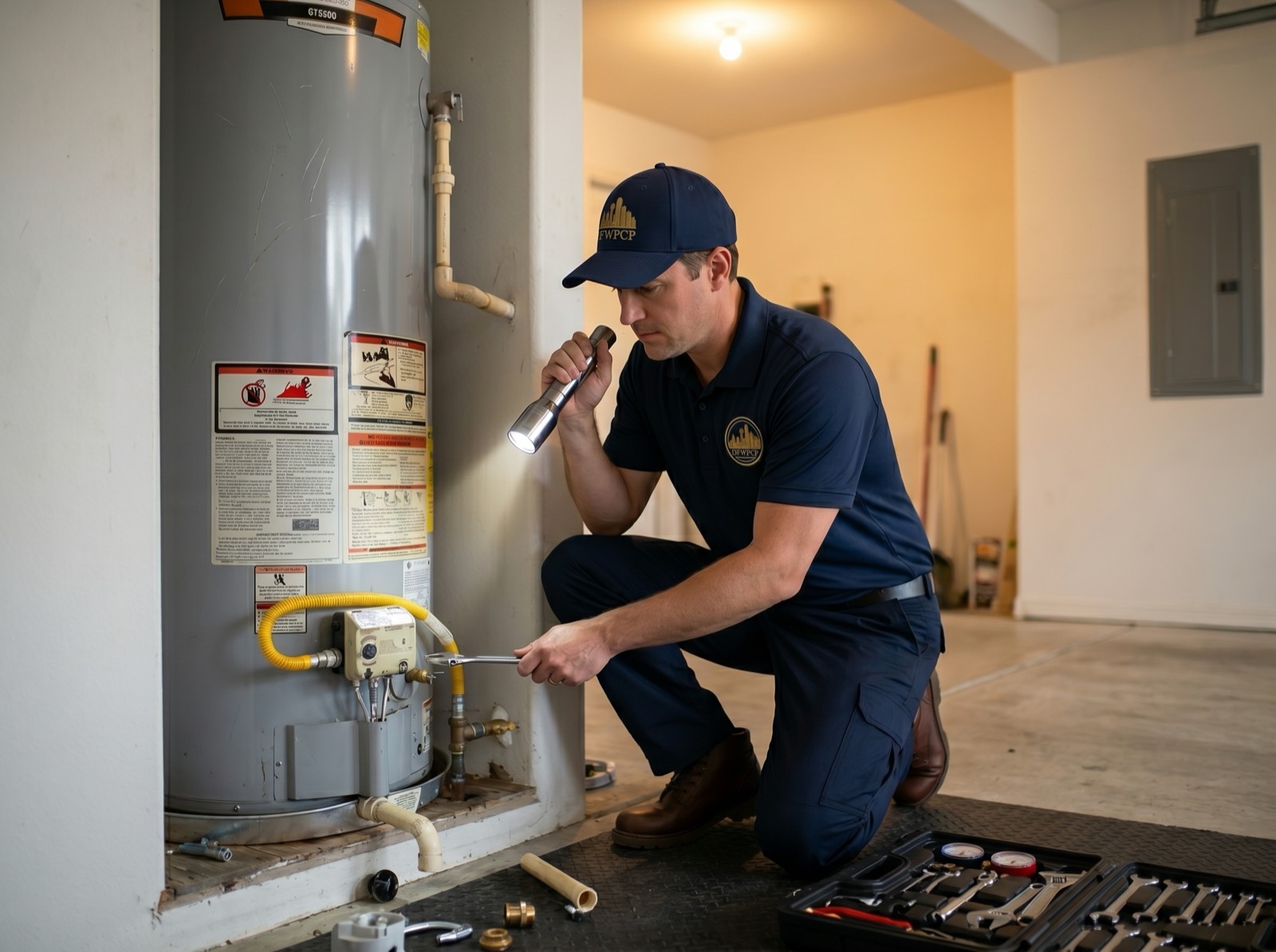
Under the Texas Occupations Code Chapter 1301 (The Plumbing License Law) and regional municipal codes (including Mansfield, Arlington, and Fort Worth), hot water heaters are classified as regulated appliances. This means installing, replacing, or modifying a water heater requires a plumbing permit. It also requires the work to be performed by or directly supervised by a licensed Texas Master Plumber (RMP).
Handymen or unlicenced contractors who claim you "don't need a permit" are putting your safety and your financial liability at risk.
A water heater is under constant high pressure and generates intense heat. If installed incorrectly, it presents several catastrophic hazards:
This is the biggest risk homeowners overlook. If an unpermitted water heater leaks, ruptures, or causes electrical/fire damage, your insurance adjuster will ask for the municipal permit records. Under most standard homeowners insurance policies, claims can be legally denied if the damage was caused by unpermitted or unlicensed mechanical/plumbing work.
When a city inspector visits your property to sign off on a permit, they check several safety components that competitors frequently skip:
At DFW Plumbing Compliance Partners, compliance is our name. When we install a water heater, we register the contractor credentials with your city, pay the permit fees, and file the paperwork. Once the install is complete, we coordinate with the municipal inspection department to schedule a time that works for you. You get a copy of the official sign-off sheet for your files, protecting your property value and your insurance status.
Get a code-compliant, permitted installation backed by our Master Plumber guarantee.
(817) 670-2530