Slab leaks are silent property destroyers. Because your plumbing lines run directly beneath your concrete foundation, a leak can flow for months before showing obvious signs. Here is what to watch for.
In the Dallas-Fort Worth Metroplex, our soil behaves differently than almost anywhere else in the country. Our thick, active clay expands like a sponge during heavy rainfall and shrinks during dry summers. This massive shifting places thousands of pounds of pressure on concrete foundations, which can cause under-slab copper and sewer pipes to bend, crimp, and crack.
Because these pipes are encased in dirt and concrete, you won't see water pooling on your lawn or dripping from your ceiling. Instead, you have to look for the subtle, secondary signs of foundation water damage.
Locate your water meter (usually near the street in a concrete box). Ensure all water-using appliances and faucets in your home are completely off. Check the meter. If the small low-flow indicator dial (often a red or blue triangle/starburst) is spinning, or if the digital read numbers are increasing, water is flowing. If you don't see any leaks above ground, the leak is likely beneath the slab.
Historically, plumbers would jackhammer random holes through foundation floors hoping to spot the leak. This destructive approach is outdated, expensive, and unnecessary.
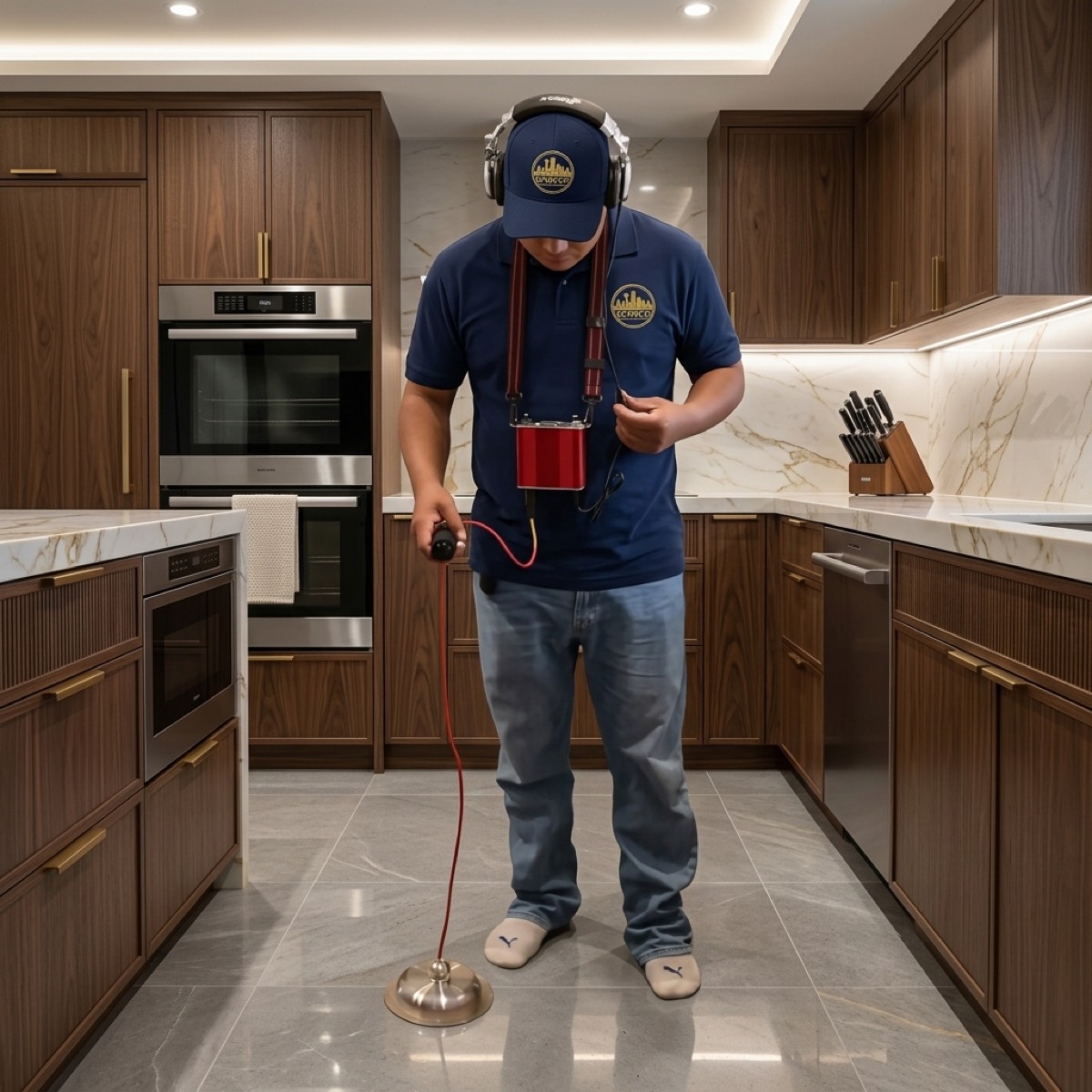
At DFW Plumbing Compliance Partners, we use non-invasive acoustic technology. By injecting a tiny amount of compressed gas into the pipe lines and using highly sensitive acoustic microphones (specifically the Sewerin Aquaphon system), we can hear the exact frequency of escaping water or gas through concrete. Coupled with FLIR thermal imaging cameras to track heat signatures under floors, we locate leaks down to the exact tile or floorboard before ever moving a tool.
If you suspect a slab leak, do not wait. The longer water flows, the more it washes away supporting soil under your home, which can lead to foundation failure. Ensure you hire a licensed Texas Master Plumber who is registered to pull municipal permits in your city. Standard home insurance policies typically cover the cost of locating and accessing the leak, provided the work is fully documented and permitted.
Contact our Master Plumber-led team today for non-invasive slab leak detection.
(817) 670-2530